Co-creating local knowledge networks: A care-based approach through local music, songs, folklore and dance
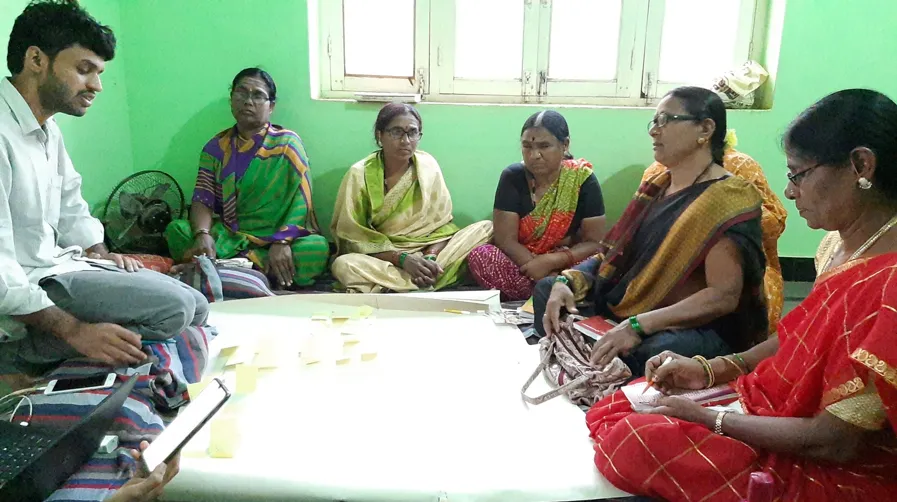
The project was a partnership of co-learning from different local contexts of interconnections as experienced by the women and gender fluid people, capturing their stories, discovering channels of indulgence over emergent mesh networks. It is about discovering stories as voices that catalyse rebuilding the past using images, objects and spaces today to frame collective memories. It is also about co-creating digitally archivable and shareable visual frames of the past that are enmeshed in aspirations of the present.
This project was situated in Bidar (Deccan Living Labs), with co-learning from two other geographies of Devarayanadurga (Janastu/Servelots) and Palghar (BAIF-Gram Marg). The partners in this project have engaged within their respective local contexts over the years having differential approaches. A common aspect across these geographies is the voice and expression of women and gender fluid people, their experiential and embodied knowledge which they disseminate through songs, folklore, stories and so on.
In this article we share a snapshot of our experience from in Bidar CLKN (Co-creating Local Knowledge Network), an experimental collaboration with four performative Communities of Practice. These collaborations took place in 2019, over the years the learning from CLKN has guided and shaped the principles, process and nurturing place-based engagements of COwHKI (Community-Owned Wireless Health Knowledge Infrastructure), CHL (Channapatna Health Library), Culturally Crafted AI, AI-mediated Reproductive Health Cultures and Visual Cultures to rediscover microhistories of Technologies. All these engagements are now part of a long-term place-based enagagement called Local Techno Futures.
Given the experimental nature of COW-Mesh (Community Owned WiFi Mesh network) as a technology, we recognised the need for a human-interface to ease the process of familiarising the communities to the idea of a network, digital archiving and decentralised network. This required us to develop an approach keeping the two catalysts we proposed in this project. It resulted in co-design of a strategic approach which has care-in-practice/feminist approach at the core, we called it ‘People as nodes’.
These were a few actions that were taken:
- Building a mesh with Libre Routers
- Build a portal and intranet with services for these practitioners
- Archiving the practices in-situ and also in the presence of the other practitioners from these communities and places
- Women singers and storytellers at Multani Pasha Dargah
- Bulai Padagalu sung by women during Panchami festival
- Muharram Padagalu singers in Bampalli Village
- Kumabara padagalu at Naubad
- Women Shayaras
- Women Shayaras
- Bhooteru community
- Datta Temple Bhajan group at Tajlapur
- Gondaligaru near Gowli Galli in Bidar
- Seegi Haadu
- Valmiki Samaj
- Rajagondaru community residing in Gornalli
- Mangalwadi in Deendayal Nagar near Karnataka College
- Brahmanwadi near Chowbara, where the women sing conversational songs while cooking or food preparation
- Bhovigalu at Naya Kaman Darwaza
- Jingar (Kammar), who are cooks and bhajan singers.
- A person that records and facilitates annotations and cross-annotations in pursuit of the idea of People as nodes.
We took to a collective process where we recognised the need to appreciate existing performative practices (part of cultural heritage in Bidar) that hold local knowledge of different kinds, to co-create a platform for the lesser known/understood knowledge practices in Bidar. Demonstration and public engagement were the approach used to converse about the process of recording on Pi Zero, connecting to the local WiFi network and using a browser-based interface to playback the recordings in nine different locations of Bidar walled city. Our exploration started with 15 groups/communities, closely worked with 4 out of the 8 groups/communities who were keen to learn and co-create CLKN.
- Khadim in Mulatni Pasha Dargah: These are women living in and around the Multani Pasha Dargah situated in the Old city (Historic Precinct) of Bidar. They offer service to the Dargah and the followers of the Sufi saint Hazrat Multani Pasha, who visit his shrine in his Dargah. Nature of service they offer is to sing at different occasions such as naming of the new born, asking a Mannat (a wish or a desire), communal cooking, offering a prayer and so on. One of the services is to maintain and clean the Dargah premises. As part of the project we engaged with 6 women and girls.
- Women in Naubad Kumbara community: Kumabara are an occupation-based community of potters. We engaged with women from Naubad, a locality in Bidar. The women and men both engage with the craft of making pottery items. They sing Kumabara padagalu (songs) at the time of working, festivals, community rituals and as a bhajan (devotional songs). These songs are passed on from one generation to another through performative practice.
- Shayaras (Women Urdu writers and poets): Bidar is also one of the places where Urdu language has its origins. We engaged with a Shayara (poet) who is one of the few women writers assoicated with a writers group called ‘Yaaran-e-Abab’ (Friends of Literature). She has published more than 200 essays and books in Urdu. She is differently-abled by birth and her writings are on seeing the world as a differently-abled person and feminist discourse on the role of women in her immediate society. Since most of her writings are in Urdu the access is limited not only outside but within Bidar, in her locality. Through this project we started to create audio recordings in her voice to make an archive of her work
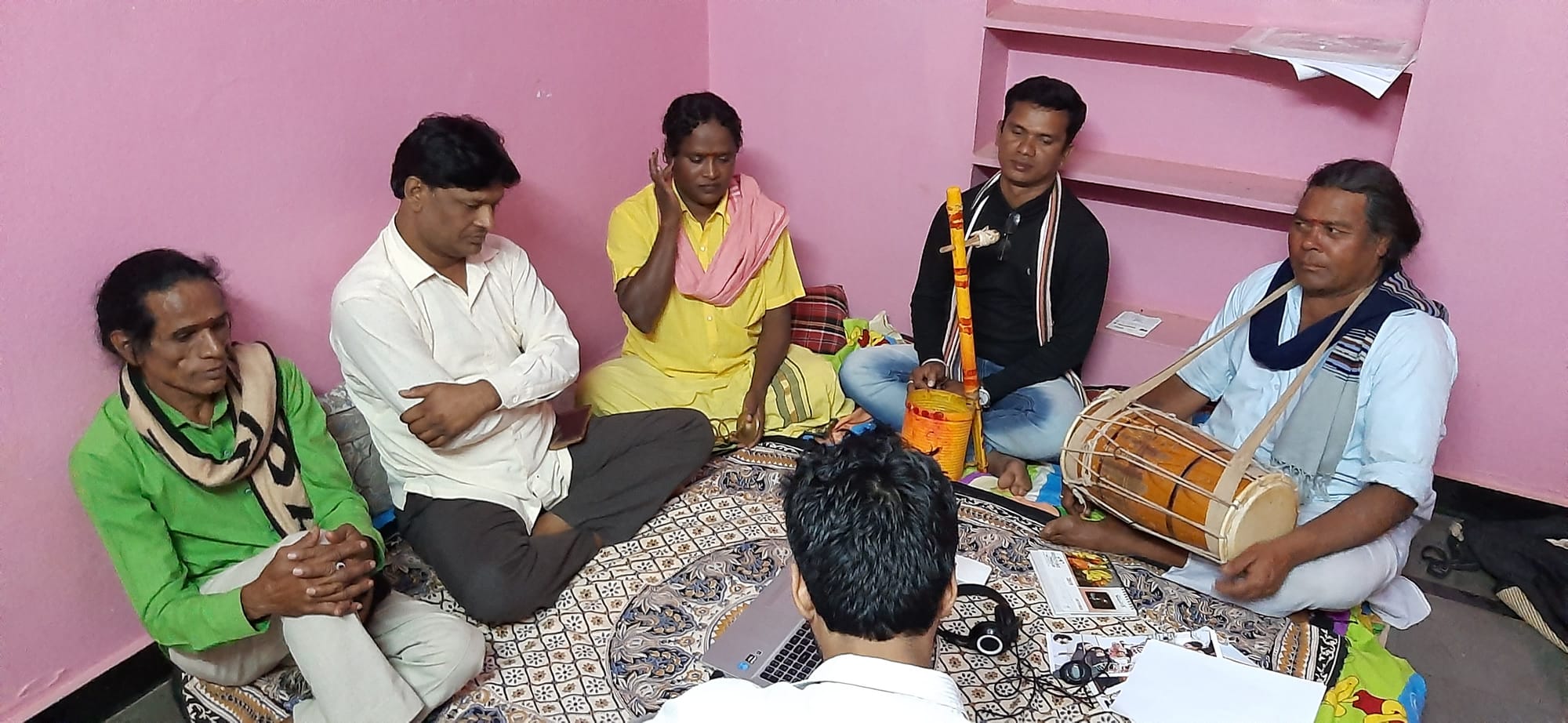
- Bhooteru and Aradhi: This is a community that identifies itself with the ritualistic practices associated with the Bhavani Mata Temples. Their performance happens in a group either in the temples or at homes where they are invited. During the performance they sing different songs. The group engaged with comprise of 7 members from this community who live in in the Old city of Bidar. They are mostly male performers and ritually choose a non-binary gender. Some continue to remain as woman and the others transform into a woman at the time of the performance. This bring stigma to this community as they are thought to be transgender. It is a fading practice and the misconception with their gender often leads to exclusion in the everyday life. .
During one of the interactions with one of the artist from the Bhooteya community, a story of greedy oil merchant was shared and the whole premise of that performance is around giving a life lesson for the listeners, on how greed and arrogance displeases the Goddess, who causes his downfall. This and many other stories which the artist shared during the conversation deserve to be recorded and shared.
Similarly with Women Khadim at Multani Pasha Dargah have some very beautiful songs that they perform almost on a daily basis as part of rituals associated with dargah and the devotees who visit. Also the stories that are associated with the dargah and how those are narrated by these performers and the people associated with the dargah are somethings that need to be cherished. The performance by a group of Bhooterus headed by Ms.Thulasamma at the Kalika Mata temple, Kumbarwada gave us an opportunity to see them perform for a huge gathering, was brilliant and the fact that they willingly agreed to allow us to record and also ask clarifying questions in between is something unforgettable. We are especially proud of the fact that we were able to win their trust and convince them to come on board for this project.
Some of the women expressed the value in recording their practices which seldom receives the kind of recognition it should. In one of the interactions with Dholak singer who is over 60 years old with seven sisters and five grand daughters whom she exposed to the performative form of Dholak geet (songs). She found them not keen to learn and continue the practice.
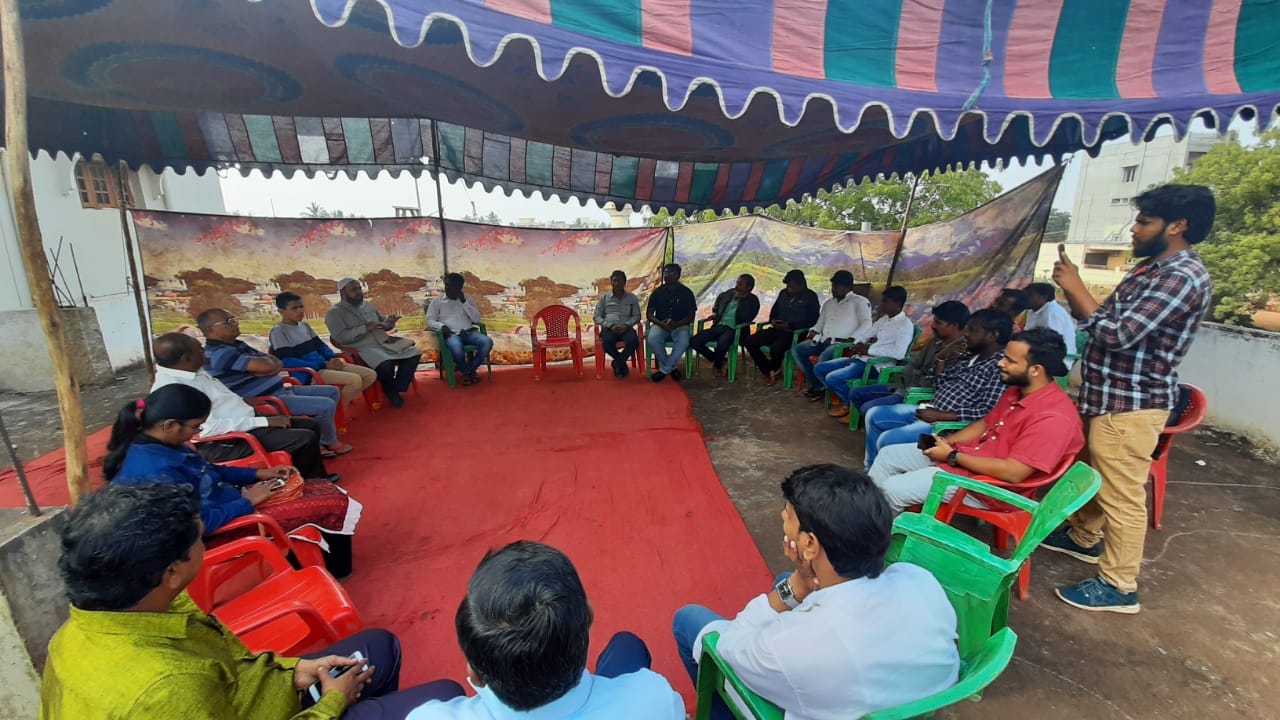
Following is the list of performative forms gathered using pi recording devices,
- Parashuramana padagalu.(songs of Parashurama a mighty sage from the ramayana times)
- Yellammana padagalu.(songs of yellamma a powerful female diety prominently worshipped in the region )
- Nagara ghanigana kathi (folklore in the form of a song,)
- Bhangaar lalavathi kathi a.k.a Gannikeri(pari) kathi. (folklore in the form of song)
- Ikram rajana kathi(story of a king Ikraam, a mythological character.)
- Maalgarana Kathi( folklore in the form of a song, based on a wealthy tax collector).
- Seegi Haadu(SEEGI songs sung by group of women, especially during the Dasara festival, to ward off bad spirits and welcome prosperity.)
- Ritualistic songs performed by the group of singers from the Valmiki community.
- Jhoole ke gaane (songs for cradle ceremony of newly born child) and other songs sung as part of some rituals at the Multani Pasha Dargah.
- Maroor ke baba song(song sung in praise of a local sufi saint whose dargah is in Maroor village.
- Peer-e-Murshad song( songs sung in memory of the local peer(nobleman) by the dholak singers.
- Bhajan(Devotional) songs sung by the group of women at Bheem Nagar).
Workshop 01:
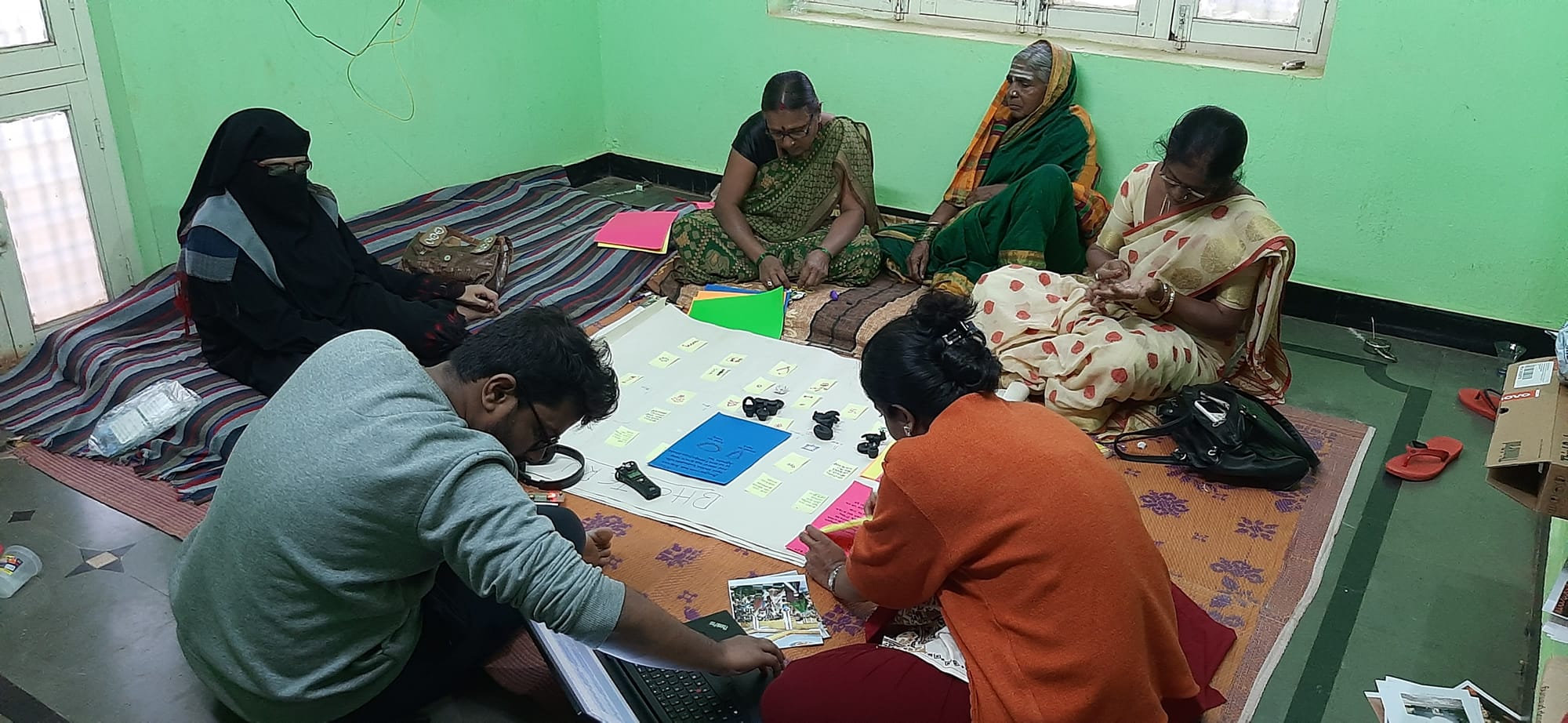
Workshop 01 was facilitated on 7th Dec 2019 with Bhooteru, Kumbara , and Shayara in DLL Nodal Centre. The intent of the workshop was to understand and document their understanding of the song and also that trigger their memories, associated with it. This was to be achieved in the form of oral narratives, writings, drawings etc.
Workshop 02:
A follow-up workshop 02 was organised on the 20th Dec 2019 with Kumabra and Shayara. The Bhooteru group were not available as they were travelling. The intent was to continue the process introduced in the previous workshop to find the comfort and value in exchange of knowledge and life experiences triggered when the groups heard each others songs & writings.
Sahabhojane (Communal lunch) meet
was organised on 29th Dec 2019 to read excerpts from the Constitution of India using voice recording as a medium and a demo of the decentralised wifi mesh network.
An exhibition of the collection by local collector Liyakath Ali Khan Saab
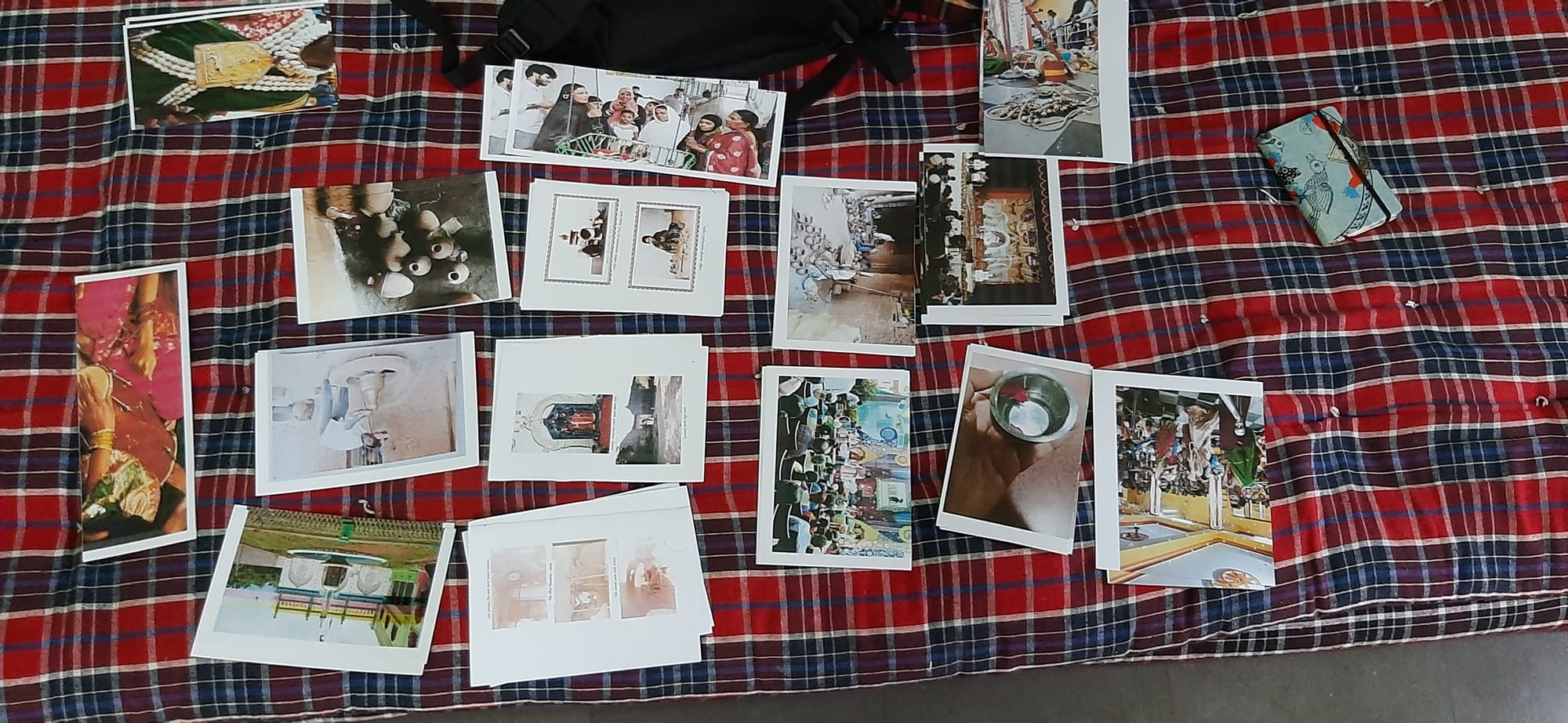
was organised on the 31st Dec 2019. The items from the collection were used as a trigger for local history and practice while visitors shared their memories on decentralised adhoc network as a demonstration to residents within the coverage area.
An exhibition with Srishti faculty and students
Organised on the 20th of Feb 2020 as a culminating event for a postgraduate learning studio on ‘Archiving the City’ where the Mesh infra was revisited and the three groups Bhooteru, Kumabara women and Shayara actively participated. This was again a collaborative effort between Students & faculty from Srishti Institute of Art,Design & Technology, DLL (now Living Labs Network & Forum) and Servelots.
Institutions involved:
- Deccan Living Labs (Living Labs Network & Forum & Team YUVAA)
- Janastu/Servelots
- Gram Marg
Maintainer-Anchor:
Shreyas Srivatsa, Vinay Kumar
Translator-Facilitator:
Supriya Nandgouli, Dilip Patil, Dheeraj Joshi
Learner-Translator:
Micah Alex, Naveen Bagalkot
Partnering Institution:
Srishti Institute of Art, Design and Technology
Funder Institution:
Association of Progressive Communication (APC)